The short answer is 20 to 30 years in typical indoor industrial environments, and frequently much longer. It is entirely normal to open a distribution board commissioned in the 1980s and find the original traffolyte labelling still perfectly legible. In many installations the labels outlast the equipment they identify, and sometimes the company that made the equipment.
The longer answer is more useful to anyone specifying labels, because service life is not a fixed property of the material. It is the outcome of the environment, the fixing method and a handful of specification decisions made before the order is placed. This article works through each factor.
Why Traffolyte Lasts: Structure, Not Surface
A printed label carries its identification as a layer of ink held onto a surface. Everything that attacks that surface attacks the identification. UV fades the print, cleaning chemicals lift it, abrasion wears it, and temperature cycling delaminates it.
An engraved traffolyte label carries its identification within the material. The lettering is the exposed core of the laminate, revealed by removing the coloured cap layer above it. There is no ink to fade and no printed layer to peel, because the text is a structural feature of the sheet itself. The label can pick up surface wear across decades of cleaning and contact without the lettering becoming any less legible.
The Factors That Determine Real Service Life
- Environment. Indoor panels and plant rooms represent the gentlest conditions, and labels there routinely pass 30 years. Outdoor exposure, coastal salt spray and chemically aggressive process areas shorten life, and those environments deserve a conversation with the supplier before ordering.
- Fixing method. This is the most common real world failure point, and it is usually the fixing that fails rather than the label. Adhesive backing degrades long before phenolic laminate does, particularly in heat and vibration. Mechanically fixed labels, screwed, riveted or cable tied, remove that failure mode almost entirely.
- Engraving depth and character height. Sufficient depth keeps lettering legible even after decades of surface wear, and correctly specified character heights keep labels readable at their actual viewing distance rather than only up close.
- Installation quality. Labels fitted flat, fixed securely and positioned away from direct mechanical strikes last dramatically longer than labels forced into curved surfaces or mounted where they take repeated impact.
What Failure Actually Looks Like
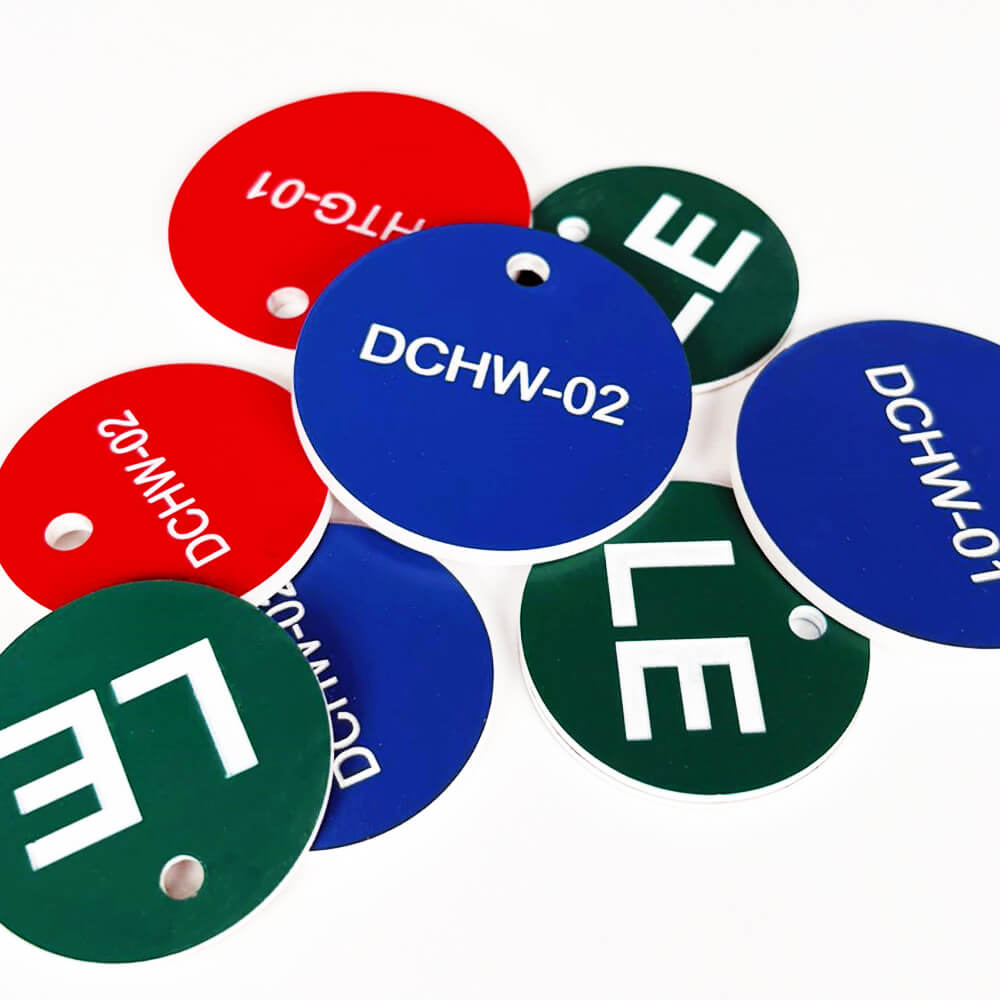
Genuine material failure of traffolyte is rare. What surveys of older installations typically find instead is missing labels where adhesive gave up, labels that were engraved too shallow by an inexperienced supplier, or labels specified in the wrong material for the environment. The photo that opens our complete guide to traffolyte labels shows a printed label failing in exactly this way, with white text disappearing as the red surface wears off. That is the failure mode engraving exists to prevent.
The Cost Comparison That Matters
Printed labels in the same industrial environments typically need replacing within 5 to 10 years. On its own that sounds like a manageable maintenance item. In practice, relabelling a populated distribution board years after commissioning means working around live circuits, restricted access and label schedules that no longer exist. The cost of the return visit dwarfs the difference in unit price many times over.
The right comparison for a specifier is never the price of one label against another. It is the total cost of keeping identification legible across the lifetime of the installation. On that measure, engraved traffolyte is usually the cheapest option available.
Specifying for Maximum Life
Three decisions capture most of the available durability. Choose mechanical fixing over adhesive wherever vibration, heat or safety criticality are present. Specify character heights for the real viewing distance. And confirm the environment with your engraver, because harsh chemical or outdoor conditions occasionally point to a different material entirely, which is a conversation worth having before the order rather than after the failure.
Total Industrial Engraving has been producing engraved traffolyte labels since 1996, and some of our earliest labels remain in service today. Get in touch to discuss your project, or start with the complete guide to traffolyte labels for the full specification picture.