Control panel labelling rarely causes problems at the start of a job. It usually becomes an issue later - when schedules change, layouts shift slightly, or a panel extension means numbering no longer lines up with what was originally planned.
That's typically when contractors stop treating labels as a finishing detail and start treating them as part of the build process.
This guide covers the key decisions around specifying traffolyte labels inside electrical control panels - from material thickness and character sizing through to sequencing, colour conventions, and planning for future modifications.
See also: The Complete Guide to Traffolyte Labels
Where Panel Labelling Actually Starts to Go Wrong
Most panel labelling issues aren't material problems. They're sequencing problems.
The label order is typically treated as an afterthought, something that gets sorted once everything else is in place. But the final stages of a panel build are usually where the schedule is at its tightest, and small changes compound quickly.
Common sequencing failures include:
- Labels produced before numbering is finalised, resulting in a full reorder once the design is confirmed
- General arrangement drawings updated after engraving starts, making some labels immediately obsolete
- Device positions moving during assembly so the label strip no longer matches the physical layout
- Isolator or device naming changing late in the job, particularly on multi-contractor sites where documentation is updated centrally
None of these are inevitable. But they all point to the same underlying issue: labelling decisions being made at the wrong point in the programme.
Why Label Schedules Should Follow the Panel Layout - Not the Drawings
General arrangement drawings change. Device spacing changes. Additional terminals appear.
Producing a label schedule directly from a drawing before the panel has been physically laid out introduces risk that most contractors only discover when labels arrive and don't fit.
Waiting until layouts are physically confirmed usually prevents replacing full label strips later. Where programme pressures make that impossible, building in a formal review point before engraving begins gives the opportunity to catch late design changes without absorbing the full cost of a reorder.
For larger panels, it is worth breaking label production into phases that mirror the build sequence backplate first, then door and subframe rather than ordering everything at once.
Door Labels vs Backplate Labels
Not all labels inside a control panel serve the same function, and the specification should reflect that.
Door-mounted labels are usually identifying isolators, main switches, or control functions. They get handled more frequently during operation, isolation, and maintenance, and typically benefit from larger characters and heavier engraving to remain legible under repeated contact.
Backplate labels sit closer to components and are usually read at short range during installation or fault-finding. Smaller characters are generally acceptable here, and the tighter layout often means narrower label strips are more practical.
Specifying both under the same criteria, same size, same thickness, same character height tends to produce labels that are either oversized for the backplate or undersized for the door. Treating them as separate specifications from the outset avoids that compromise.
Using Colour Coding Properly Inside Control Panels
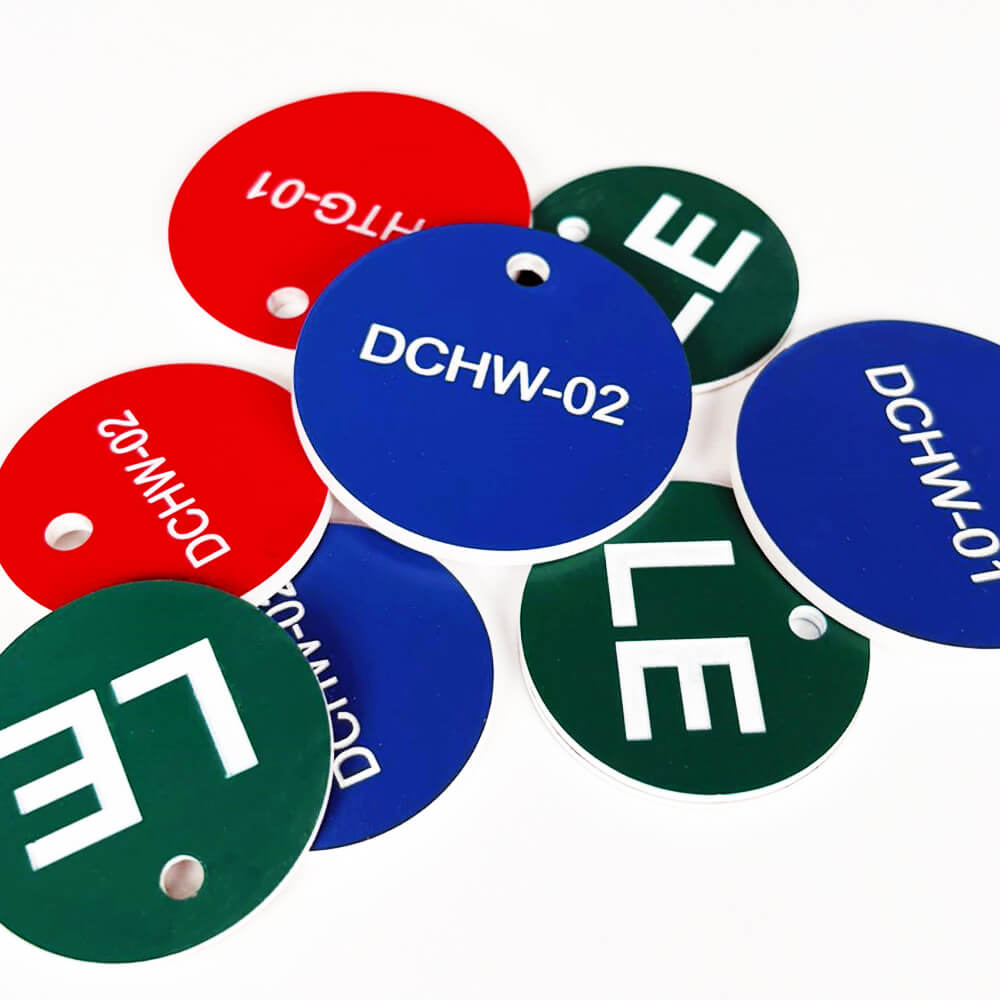
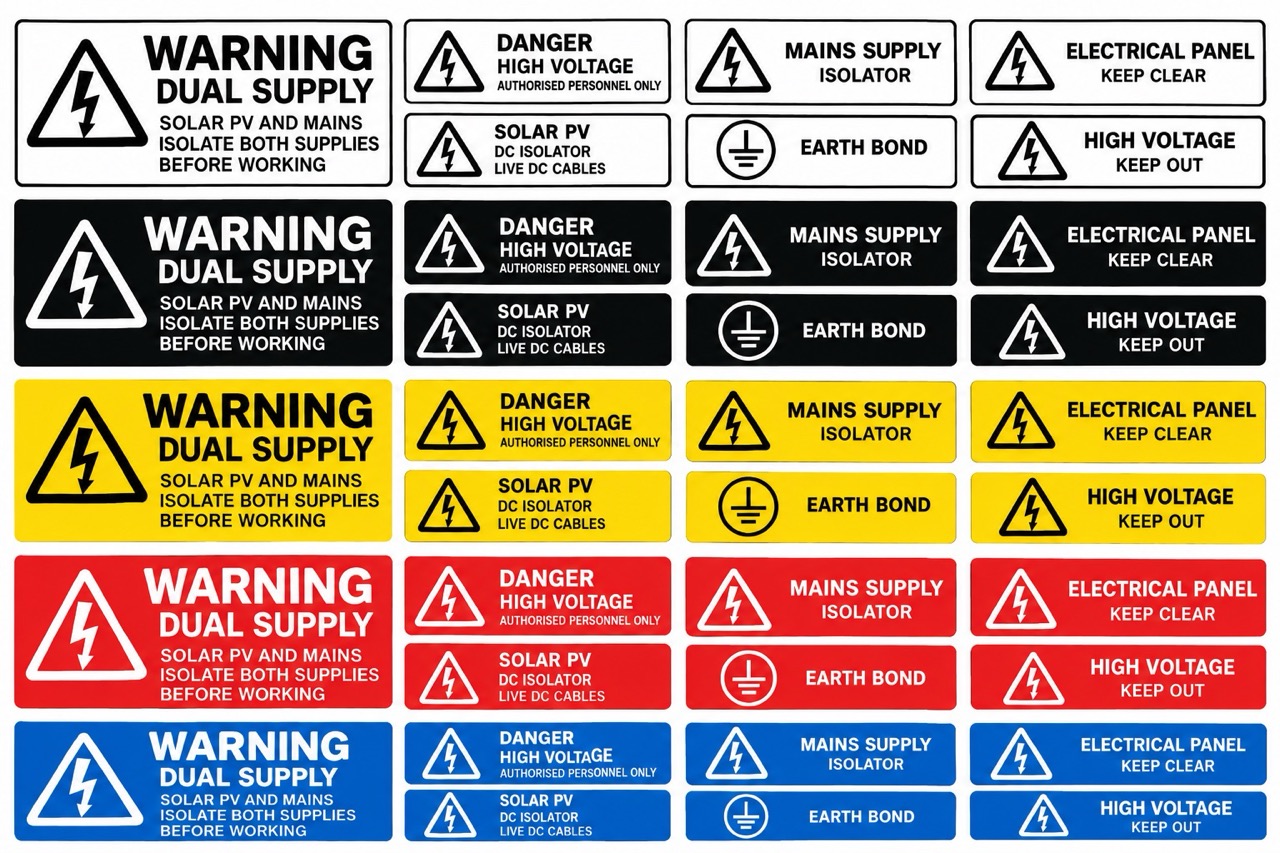
Traffolyte is available in a wide range of two-colour combinations, and colour coding inside control panels follows broadly established conventions in the UK electrical industry.
Typical conventions include:
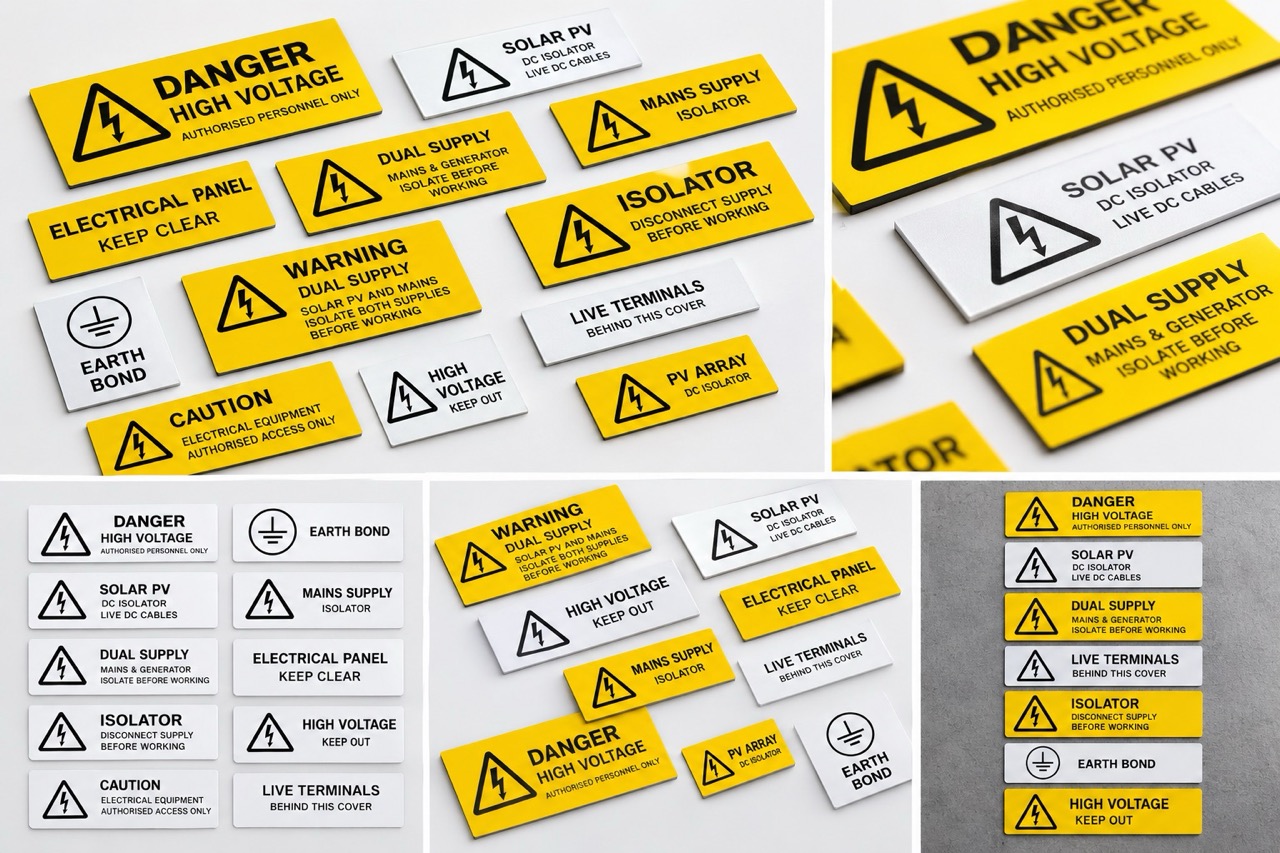
- Yellow on black: warning labels and hazard identification
- White on black: standard device identification and general labelling
- Red: emergency isolation devices and stop functions
- Green: safe condition indicators and healthy status labels
These aren't always formally mandated, but they're widely understood on site and align with the expectations most maintenance teams will have when working on an unfamiliar panel.
Where a project has a specific colour coding schedule defined by the client, principal contractor, or engineering standard, it is worth confirming this before placing a label order. Retrospective changes to colour schemes across a full panel are expensive and time-consuming.
Material Thickness Guidance
Standard traffolyte for internal control panel use is typically supplied at 1.5 mm. At this thickness, the material is rigid enough to hold its shape when fixed, but thin enough to sit flush against backplates and door panels without creating clearance issues with adjacent components.
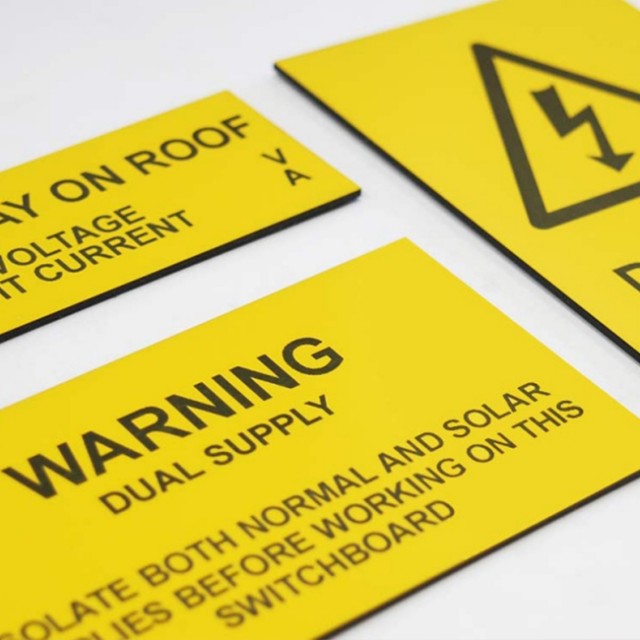
3 mm traffolyte is more commonly specified for external warning plates, equipment nameplates in exposed locations, or situations where the label is likely to be subjected to more physical contact - for example, on hinged doors that are opened frequently under site conditions.
Using 3 mm internally is not incorrect, but it can create fitting challenges in tight layouts and is unlikely to offer any practical benefit over 1.5 mm for most standard panel applications.
For character size, a minimum of 3 mm engraved characters is generally legible at arm's length. Where labels are mounted at a greater reading distance on large enclosures, for instance 5 mm or larger characters are worth specifying. Door-mounted isolator labels in particular benefit from clear, generous lettering given how often they are read under time pressure.
Planning for Future Panel Extensions
Most control panels get modified at some point. Terminals are added, devices are changed, or a client request means an additional sub-circuit needs to be accommodated.
The labelling implications of this are often not considered at the build stage and when a panel comes back for modification, the result is frequently a mix of original engraved traffolyte, replacement labels in a different style, and occasionally improvised alternatives that were never meant to be permanent.
Leaving spare numbering capacity in the original label schedule is a straightforward way to reduce this risk. If a 24-way terminal block is specified, producing labels up to 30 or 32 means future additions can be matched from the same engraving run, using the same material and character size.
It is also worth retaining a copy of the original label schedule and engraving specification. When replacements are needed months or years later, having the exact colour combination, character height, and material reference on file makes re-ordering straightforward and avoids the inconsistencies that typically arise when details have to be estimated from the installed labels.
Final Thoughts
Control panel labels don't attract much attention when everything is new and the installation is clean. But they matter more as panels get modified, extended, and handed across maintenance teams over time.
Clear, consistent identification makes fault-finding quicker, extensions simpler to manage, and handover documentation easier to produce. The difference between a panel that's easy to work on and one that isn't is often in details like this and traffolyte labelling is a detail that's straightforward to get right when it's built into the specification from the start rather than treated as a last-minute task.
For custom engraved traffolyte labels for electrical control panels, or to discuss your project requirements, contact Total Industrial Engraving.