Traffolyte labels turn up on almost every electrical panel, valve system, and piece of industrial equipment in the UK. Most people who work with them know what they look like and what they do. Fewer know what the material actually is, where it came from, or why it has stayed the go-to choice in industrial labelling for the better part of a century.
Here is a straightforward explanation.
What is traffolyte?
Traffolyte is a laminated phenolic plastic, manufactured in sheet form and used primarily for engraved labels and signage. It is made from layers of resin-impregnated paper or fabric that are bonded under heat and pressure into a rigid, dense sheet.
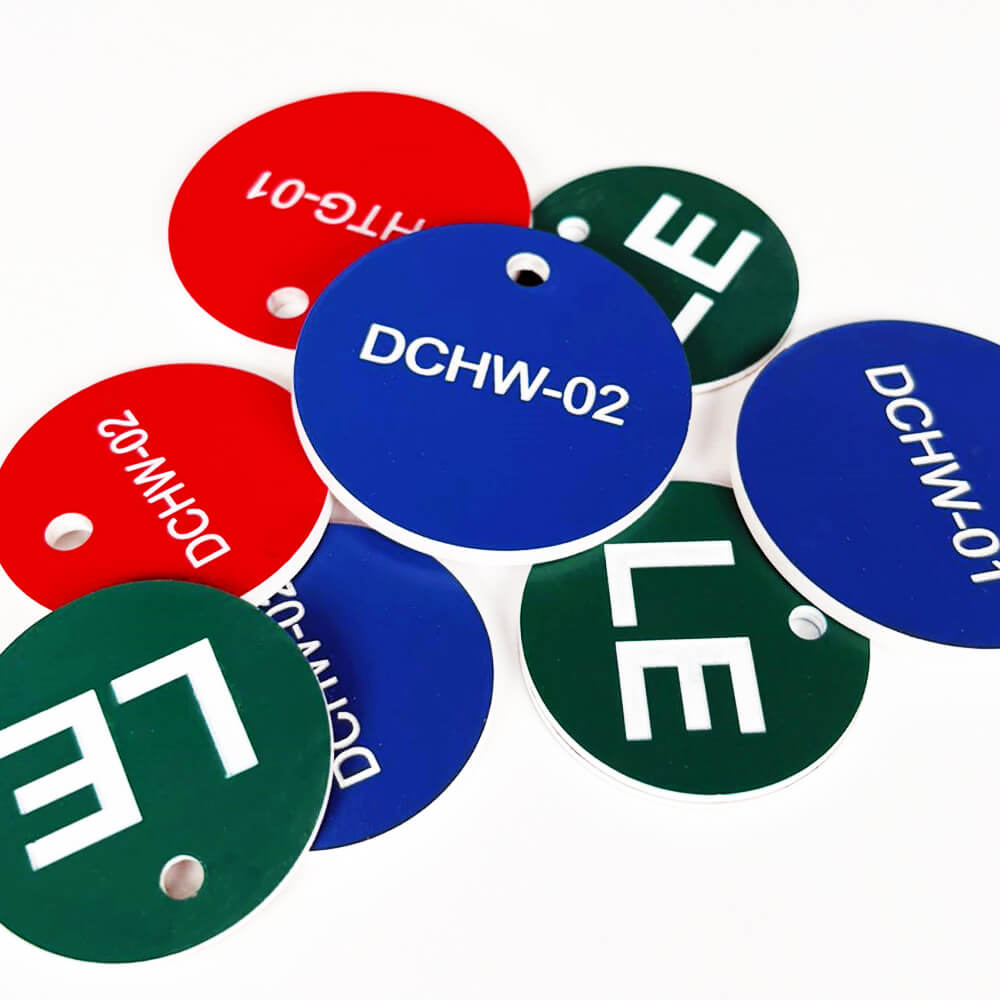
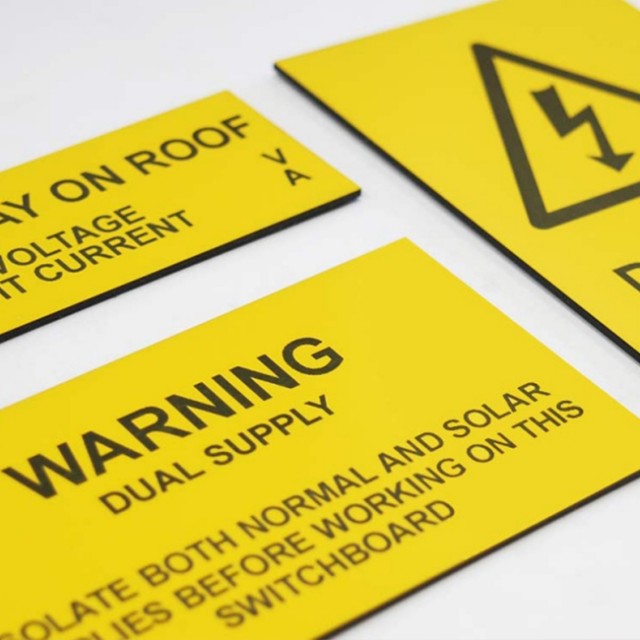
What makes it useful for labelling is its two-layer construction. The core of the sheet is one colour; the surface layer is a contrasting colour. When the surface is engraved, the cutter removes that top layer and exposes the core beneath, producing text or symbols in a permanently contrasting colour.
The text is not applied to the surface. It is cut into the material. That distinction matters more than it might sound.
Where does the name come from?
Traffolyte takes its name from Trafford Park, the large industrial estate in Manchester. The material was developed there in the early twentieth century by Metropolitan-Vickers Electrical Co., which needed a labelling solution that would last on its electrical equipment.
Like a number of industrial brand names, Traffolyte gradually became the common term for the material category rather than a single manufacturer's product. It is now used interchangeably with phenolic laminate, engraving laminate, and engraving plastic, though Traffolyte remains the name most people in the UK electrical and industrial trades actually use.
How is it made?
The manufacturing process involves bonding layers of paper or woven fabric with phenol-formaldehyde resin under controlled heat and pressure. Once the resin has cured, the material is set permanently. It cannot be re-melted or reshaped, which is part of what makes it so stable in use.
The standard construction for engraving has two distinct layers:
- A core layer, which forms the structural body of the sheet and provides the colour revealed by engraving
- A surface layer in a contrasting colour, which is removed during engraving to expose the core beneath
Standard thicknesses are 1.5 mm for most internal panel work and 3 mm for external or more exposed applications.
Key properties
- Non-conductive - Traffolyte does not conduct electricity. Inside electrical panels and switchgear, where labels often sit close to live components, this matters. Metal labels in the same position carry an obvious risk that traffolyte does not.
- Chemical resistance - The phenolic laminate construction gives traffolyte solid resistance to oils, solvents, and cleaning agents. Labels stay legible in environments where surfaces are regularly cleaned or exposed to industrial chemicals.
- UV and temperature stability - Traffolyte holds its integrity across a wide temperature range and handles UV exposure better than most printed label materials. It does not go brittle in the cold or soften in the heat, and it does not fade in sunlight the way surface-printed labels do.
- Permanent engraving - Because the text is cut into the material rather than printed onto it, there is no ink or toner to fade, scratch off, or wash away. The legibility of a traffolyte label is not affected by UV, cleaning chemicals, or normal wear.
- Dimensional stability - Traffolyte does not warp, shrink, or expand meaningfully with temperature or humidity changes. Labels keep their shape over time, which is relevant wherever they need to sit flush against a surface or fit within a specific space.
Where traffolyte labels are used
The material turns up across a wide range of industries, broadly anywhere that permanent, legible identification is needed over a long service life.
- Electrical control panels: device identification, terminal labelling, isolator marking, and warning plates
- Valve tags: plant rooms, process pipework, and HVAC systems
- Machine and asset plates: equipment nameplates, serial numbers, and safety information
- Data centres and comms cabinets: port labelling, patch panel identification, and equipment tagging
- Food manufacturing: labels that can handle washdown environments
- Rail and transport: rolling stock identification and safety signage
- Utilities and infrastructure: substation labelling and gas and water infrastructure identification
In most of these settings, traffolyte is not a premium specification. It is simply the practical choice that holds up where printed alternatives would not.
Colour options
Traffolyte is available in a wide range of two-colour combinations. The most common in the UK electrical industry follow broadly recognised conventions:
- White on black: standard device identification and general panel labelling
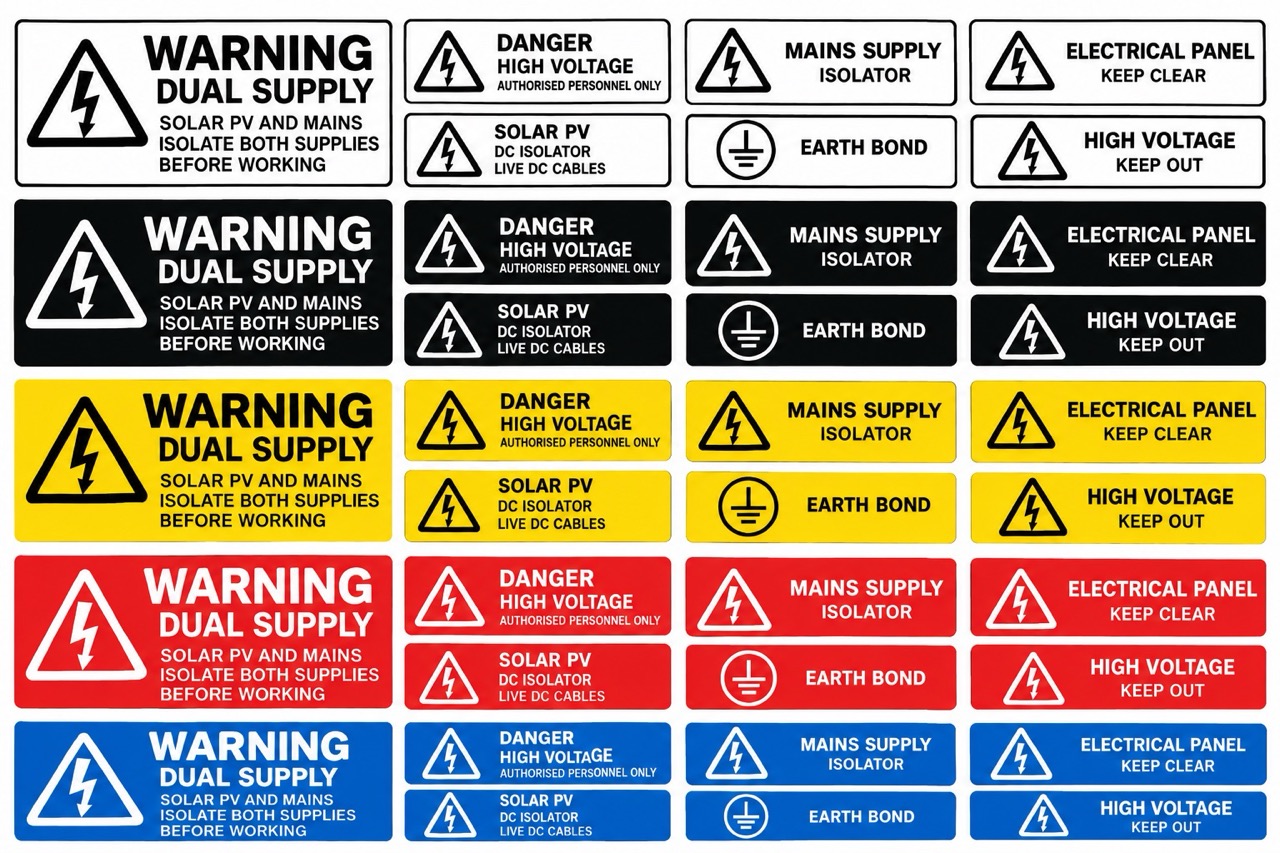
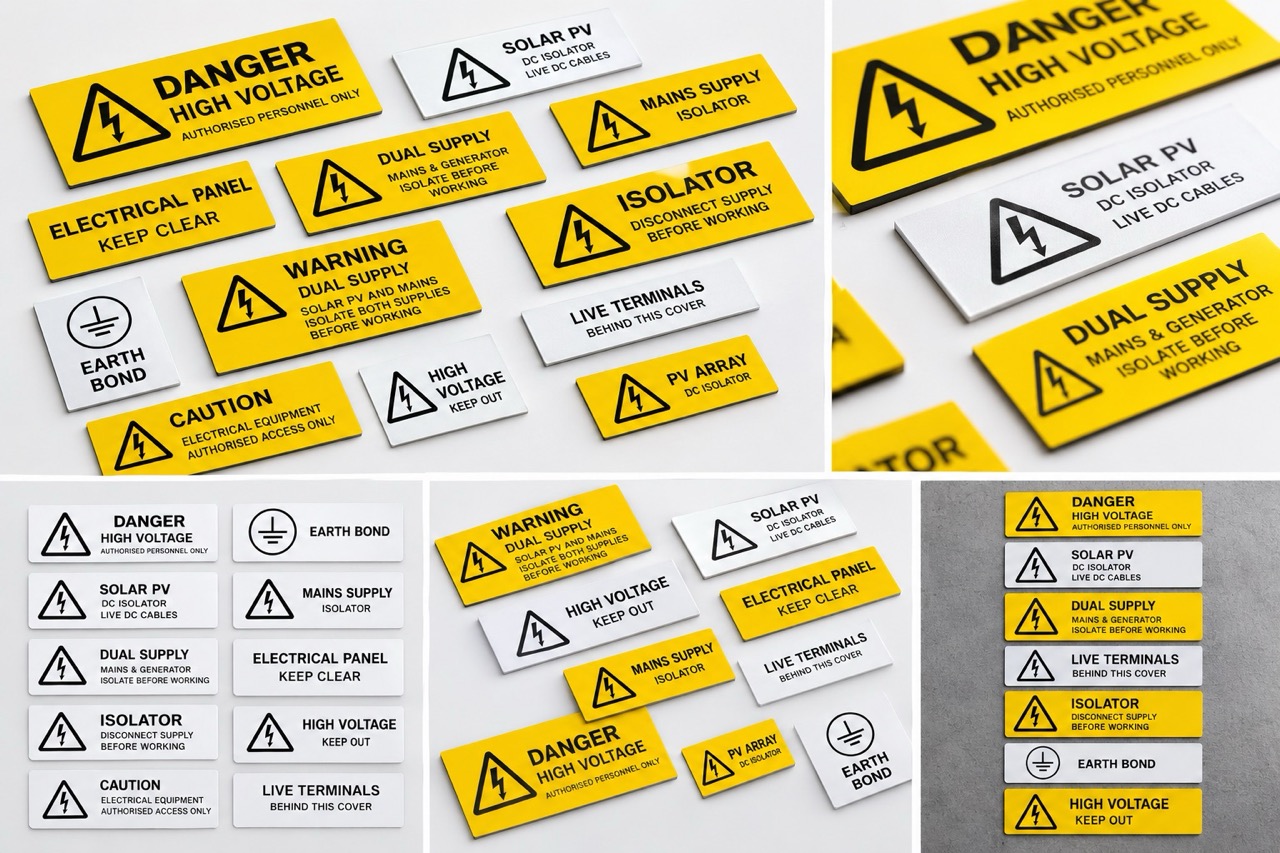
- Yellow on black: warning labels and hazard identification
- Red on white or white on red: emergency isolation and stop functions
- Green on white: safe condition and healthy status indicators
- Black on white: general purpose where high contrast is the priority
Colours can be specified to match a project's own colour coding schedule. Most suppliers offer a range beyond the standard combinations.
Traffolyte versus the alternatives
Printed labels on polyester or self-adhesive stock are quicker and cheaper to produce in small quantities. They are surface-printed, which makes them vulnerable to fading, abrasion, and chemical exposure over time. For short-term use or low-stakes applications they are often fine. For permanent identification in working industrial environments, they tend not to last.
Micro-laminate alternatives are materials with similar properties to traffolyte, often used in the same applications. They can be a sensible choice where a particular colour combination or sheet format is not available in standard traffolyte.
Anodised aluminium labels are durable, look good, and work well for equipment nameplates and external applications. They conduct electricity, so they are not suitable close to live components.
For electrical panel and industrial process labelling, traffolyte or an equivalent phenolic laminate is the standard for good reason. It does the job reliably over a long service life without requiring much thought once it is in place.
How traffolyte labels are produced
Production involves removing the surface layer to expose the contrasting core, either by rotary engraving or laser engraving.
Rotary engraving uses a mechanically driven cutter to remove material. It produces a clean, slightly recessed finish and has been the traditional method for traffolyte work. It handles text and straightforward graphic elements well across the standard sheet thicknesses.
Laser engraving uses a focused beam to vaporise the surface layer. It can achieve finer detail and tighter tolerances, which becomes relevant for smaller character sizes or more complex artwork. Both methods produce a permanent engraved result. The choice between them usually comes down to what equipment a supplier runs and what a specific job requires.
Specifying traffolyte labels for your project
Total Industrial Engraving supplies custom engraved traffolyte labels to order for contractors, panel builders, facilities teams, and procurement managers across the UK. Whether you need a handful of labels for a single panel or a full schedule for a larger project, get in touch to discuss your requirements at totalindustrialengraving.co.uk.
See also: The Complete Guide to Traffolyte Labels