
When people picture a solar farm, they normally think about rows of panels stretching across a field.
What they don’t usually think about is the amount of electrical infrastructure sitting behind those panels, and how much of it relies on clear identification once the site is operational.
Because modern solar farms are not simple installations.
Behind the arrays themselves, there are inverter stations, transformer compounds, switchgear, containment systems, combiner boxes, monitoring equipment, isolation points and huge amounts of cabling spread across sites that can cover enormous areas.
And unlike many industrial installations, solar farms are expected to operate outdoors for decades while still remaining maintainable, expandable and safe to work on.
That changes the conversation around labelling completely.
This is not really about making equipment look tidy.
It is about making large-scale renewable energy infrastructure manageable years after the original installation has finished.
Solar Farms Create Unique Labelling Problems
A lot of infrastructure inside a solar farm ends up looking very similar once everything is installed.
Rows of inverter stations can start blending into each other once a site is fully operational, especially alongside repeating containment routes and multiple combiner boxes spread across large outdoor areas.
That is normally when identification starts mattering much more.
Particularly once operations and maintenance teams are trying to trace systems across infrastructure that may have been installed years earlier by different contractors.
A site might look straightforward on the original drawings, but standing outside in poor weather trying to identify the correct isolator or cable route is usually a very different experience. On larger solar sites, equipment can end up spread across significant distances, which makes clear identification far more important once teams are moving between inverter stations, switchgear compounds and containment routes outdoors.
Most solar farms look organised during commissioning. The real test usually comes a few years later once infrastructure has evolved and multiple maintenance teams have worked across the site.
Where Engraved Labels Are Commonly Used Across Solar Infrastructure
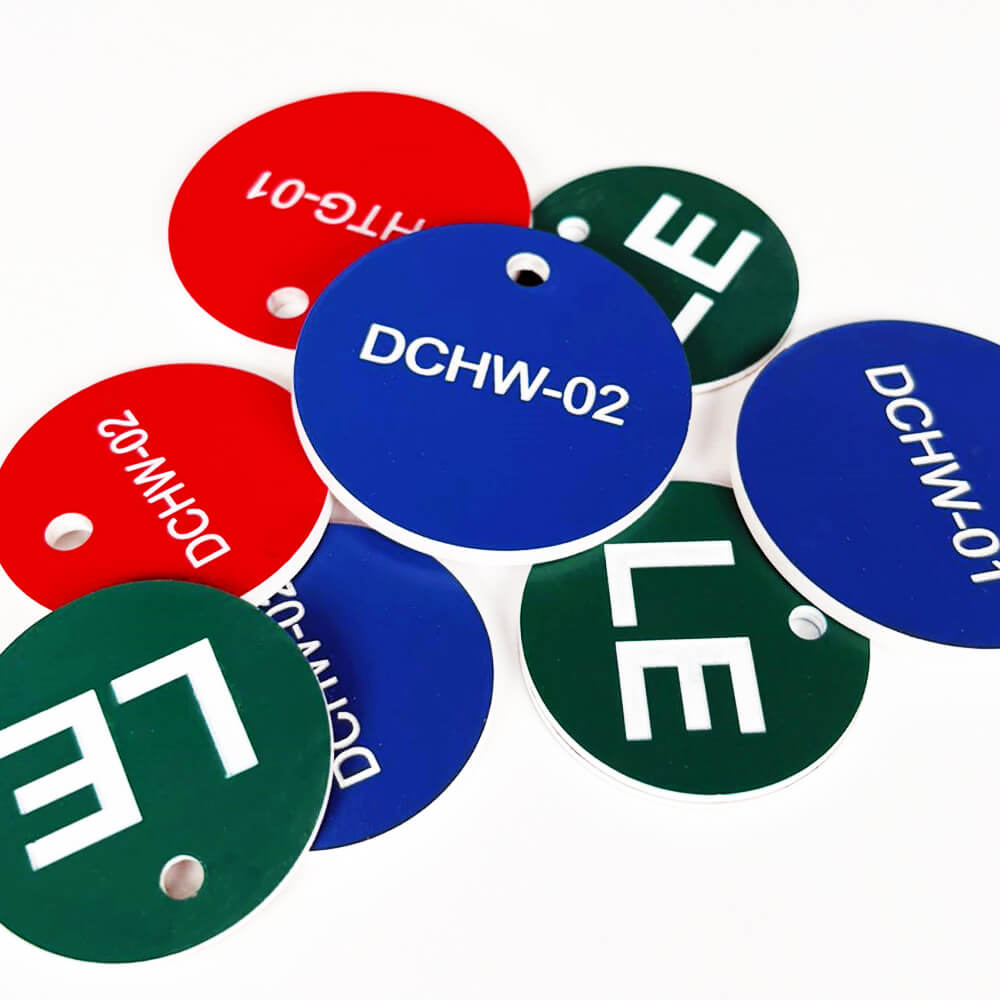
Engraved traffolyte and Rowmark labels appear across almost every major system on a modern solar site.
Switchgear is one of the more obvious examples, with feeder references, breaker identifiers and isolation points all needing to remain readable long after commissioning, particularly once additional infrastructure starts being added around them.
Combiner boxes and inverter stations rely heavily on clear identification as well. Once large numbers of similar units are spread across the same site, even small inconsistencies in numbering or naming conventions start slowing maintenance work down surprisingly quickly.
Containment and cable identification also become much harder to manage once sites evolve over time. Large solar farms often involve extensive cable routing across outdoor infrastructure where tracing systems years later can become difficult if identification standards drift between installation phases.
PV array labels and field identification add another layer again. What originally felt like a fairly straightforward layout can become much harder to follow once additional arrays, containment routes and inverter infrastructure have been added across the site over several years.
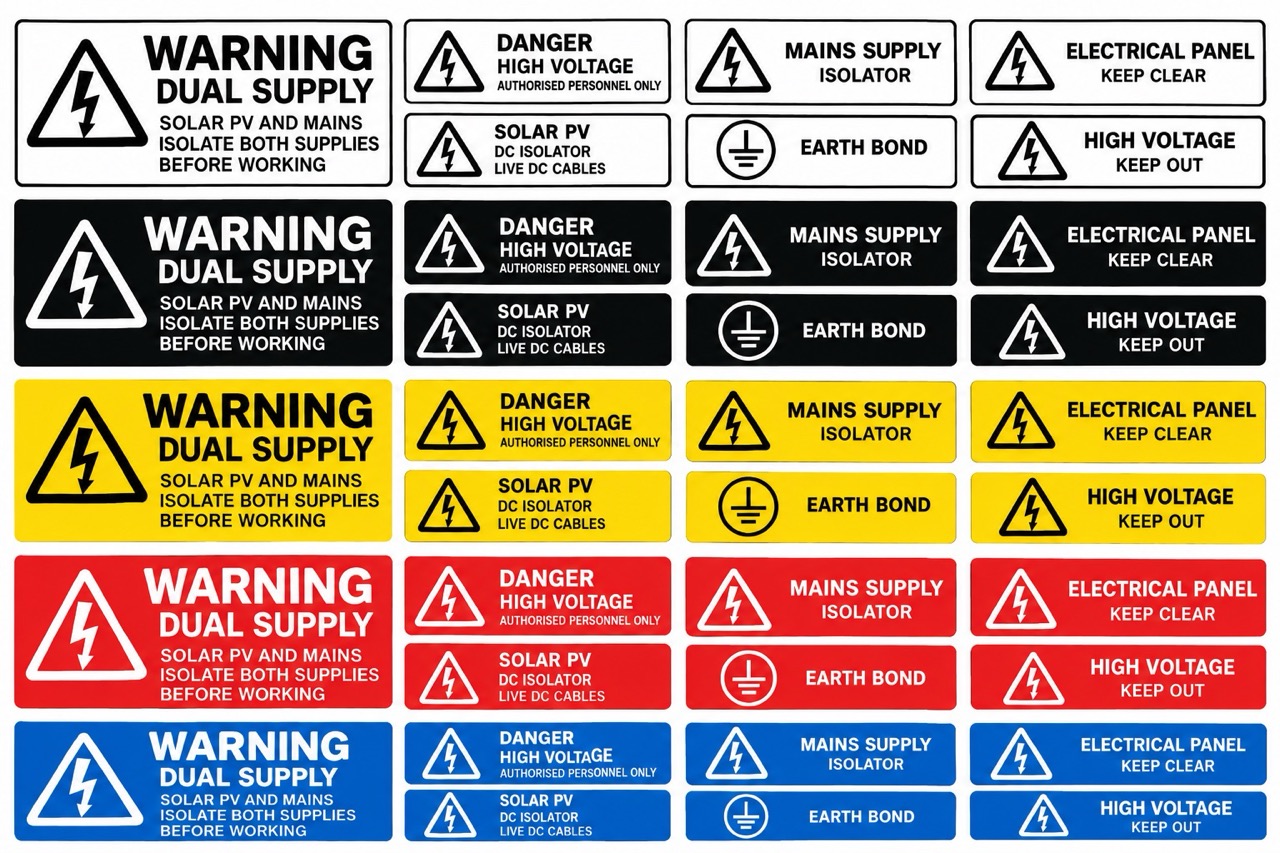
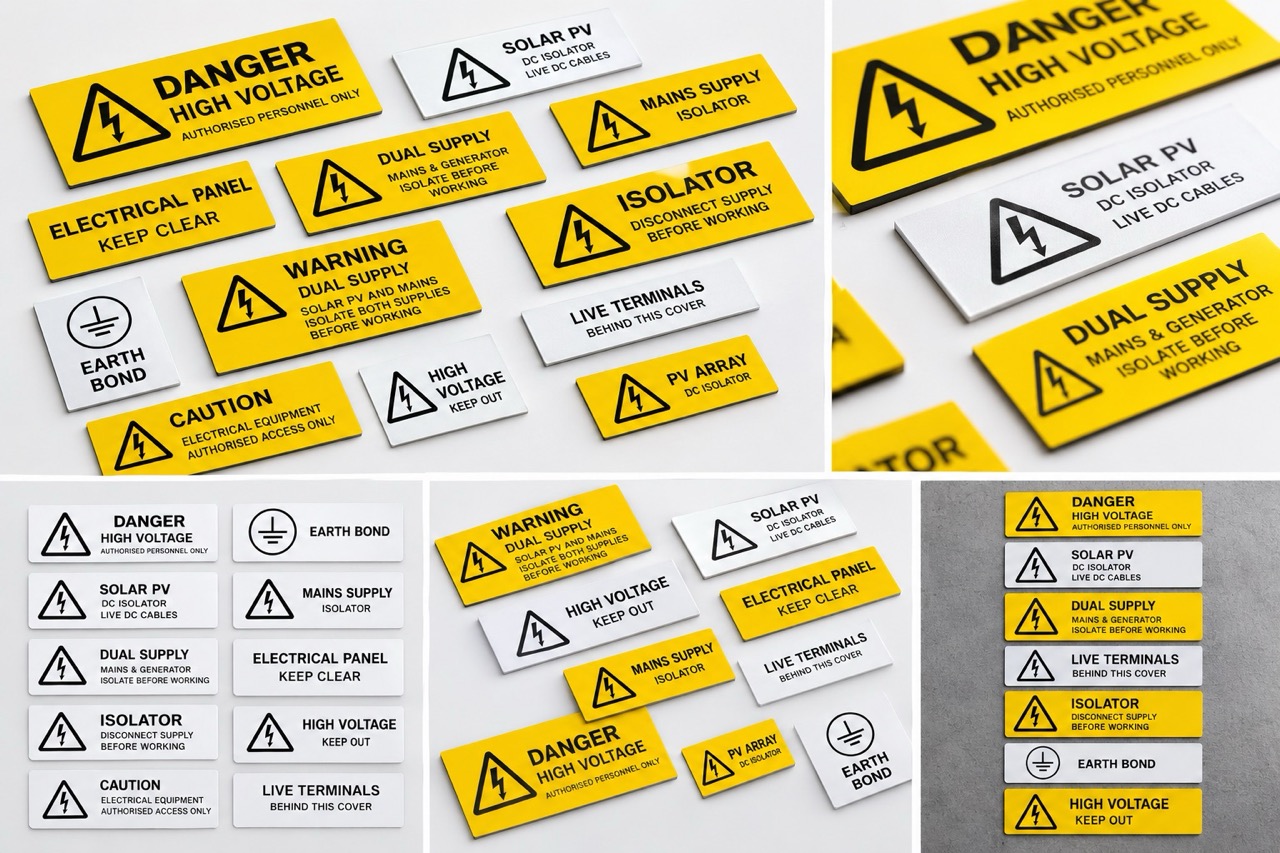
Photovoltaic infrastructure also relies heavily on clear safety identification. DC isolator labels, photovoltaic warning signage and electrical hazard identification all need to remain readable across outdoor environments exposed to weather and ongoing maintenance activity.
Battery energy storage systems introduce another level of infrastructure again. As more solar projects incorporate BESS installations, the amount of associated control equipment, monitoring systems and isolation hardware needing long-term identification increases significantly.
Larger solar sites also rely heavily on identification around transformer compounds, HV infrastructure and substation equipment where operational safety and long-term readability start mattering much more once sites enter long-term maintenance cycles.
Monitoring infrastructure tends to evolve gradually as well. SCADA systems, communication equipment and remote monitoring panels often expand alongside the site itself, which means identification standards need to remain consistent even as infrastructure changes around them.
Documentation does not always evolve at the same speed as the infrastructure itself, especially once sites have been through multiple contractors and upgrade phases.
Outdoor Infrastructure Is Much Harder on Labels
One thing solar farms do particularly well is expose weak identification systems.
Outdoor electrical infrastructure has to deal with constant UV exposure, rain, temperature changes, dust, vibration and ongoing maintenance traffic around live equipment spread across large outdoor areas.
Labels that look perfectly fine during installation can deteriorate surprisingly quickly once they spend years exposed to those conditions.
That is especially true around external enclosures and containment systems where surfaces get repeatedly cleaned, opened or worked around during maintenance.
Unlike temporary construction environments, solar farms are expected to remain operational for decades. Identification systems that feel perfectly adequate during installation can become much harder to manage once infrastructure has aged, expanded and passed through multiple maintenance cycles.
A label only really proves itself once people have spent years working around it outdoors.
This is one reason permanent engraved labels still get specified so heavily across renewable energy infrastructure. The identification itself is physically engraved into the material rather than printed onto the surface, which normally gives much better long-term readability outdoors.
Solar Farms Rarely Stay the Same for Long
A lot of people still imagine solar farms as “install once and leave alone” infrastructure.
In reality, sites evolve constantly. Additional inverter capacity gets added, battery storage systems appear years later, cable routes change, monitoring infrastructure expands and equipment eventually gets replaced.
Different contractors also end up working across the same site over long periods of time, which is normally where identification systems start drifting.
Temporary labels quietly become permanent, different naming styles begin appearing and newer infrastructure no longer matches the older sections properly.
None of that normally causes dramatic failures.
But it absolutely starts slowing maintenance and fault-finding down later.
As sites mature, operations and maintenance teams often end up working around infrastructure that has evolved over multiple phases, which makes long-term asset identification much more important than it looked during the original install.
Why Small Identification Mistakes Matter More Outdoors
Small identification issues become much bigger problems once infrastructure is spread across large outdoor sites.
Particularly during fault-finding, shutdown procedures, inverter replacement work and electrical isolation tasks where maintenance teams may already be working under difficult conditions.
Most operational delays do not come from major failures.
They come from uncertainty.
Someone trying to confirm they have isolated the correct section. Someone tracing containment routes that no longer match the drawings properly. Someone dealing with faded identifiers on equipment that all looks nearly identical from a distance.
Good identification removes a lot of that hesitation.
Clear identification also becomes especially important around photovoltaic isolation systems and electrical infrastructure where maintenance teams need to work safely and efficiently under live operational conditions.
Why Laser Engraving Works Well for Modern Solar Projects
Modern solar farms often involve large quantities of matching labels across infrastructure that may continue expanding over time.
That suits laser engraving particularly well because repeat batches stay consistent, smaller text remains clean and readable, and additional infrastructure added years later can still match the original identification properly.
That becomes especially useful on larger renewable energy projects where infrastructure may be added in multiple phases over long operational lifecycles.
Common Labelling Problems Seen on Solar Sites
Most identification problems do not appear during the original install.
They normally show up years later once infrastructure has evolved and multiple contractors have worked across the same environment.
The same issues tend to appear repeatedly.
Temporary labels introduced during maintenance work often remain in place far longer than originally intended, eventually leaving permanent and temporary identification systems sitting beside each other across the same infrastructure.
Different expansion phases can also introduce slightly different numbering structures or abbreviations, which gradually makes sites much harder to navigate consistently.
Documentation drift is another very common problem. Cable routes evolve faster than drawings sometimes get updated, leaving maintenance teams working around identification that no longer fully reflects the infrastructure in front of them.
Outdoor wear creates another issue entirely. Labels that looked perfectly readable during commissioning can become much harder to identify years later once surfaces begin ageing outdoors.
Accessibility and Safety Signage Across Solar Sites
As renewable energy infrastructure becomes larger and more complex, safety and operational signage across solar sites has become far more extensive than many people expect.
That includes photovoltaic warning labels, DC isolator signage, electrical hazard signs, operational signage, access control systems, wayfinding information and tactile accessibility signage within operational buildings.
Solar warning signs, equipment tags and cable markers also become much more important across large photovoltaic sites where maintenance teams may be tracing infrastructure across wide outdoor areas.
Consistency matters just as much here as it does with electrical identification, particularly once multiple contractors and maintenance teams are working across the same infrastructure over many years.
Why Permanent Engraved Labels Still Get Specified
A lot of people assume engraved traffolyte labels are simply a legacy industrial product.
But on long-life infrastructure like solar farms, permanent identification still solves a very real operational problem.
The infrastructure needs to remain manageable years after installation, not just during commissioning.
That becomes especially important once equipment is exposed to outdoor conditions for long periods, maintained regularly, upgraded in phases and worked on by multiple contractors over time.
As renewable infrastructure changes ownership and moves through long operational lifecycles, consistent asset identification also becomes increasingly important for long-term renewable asset management and ongoing maintenance planning.
At that point, long-term readability matters far more than short-term installation convenience.
Final Thoughts
Most engraved labels across a solar farm attract very little attention when the site first goes live.
But years later, they become part of the infrastructure that helps keep the entire site workable.
They help maintenance teams move faster, reduce confusion during isolation and fault-finding work, and help keep large-scale renewable energy infrastructure consistent long after the original installation team has left site.
Most labels look fine on day one.
The difference is whether people can still rely on them years later once the site has changed around them.
See also: The Complete Guide to Traffolyte Labels