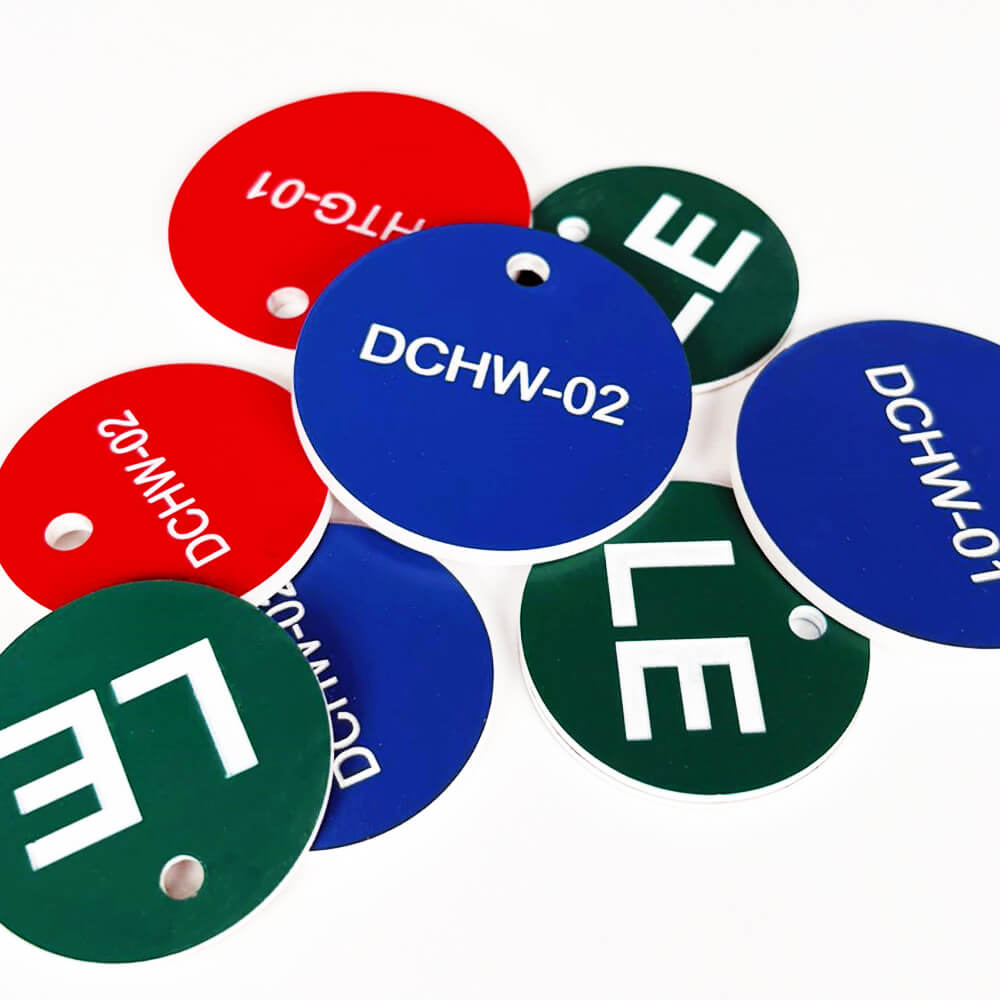
Valve tags are one of those things that seem straightforward.
Until they’re not.
Everything looks fine when it’s first installed. Clean panels, new pipework, fresh labels. Then a few years go by and things start to change. Tags go missing, others fade, and a few end up in positions where you can’t read them without a torch and a bit of guesswork.
That’s usually when people start paying attention to them.
Traffolyte valve tags have been around for a long time for a reason. Not because they’re clever — but because they tend to keep doing the job when other options slowly stop.
What Are Valve Tags?
Valve tags are identification markers attached to valves or pipework to show what they do, where they sit in a system, or what they control. They’re mainly there to help engineers quickly identify the right valve during maintenance, inspection or isolation.
Why Traffolyte Gets Used (Again and Again)
There’s nothing complicated about traffolyte.
It’s just a layered laminate where you remove the top layer to reveal a different colour underneath.
That’s it.
But because the text is actually cut into the material, it doesn’t rely on ink, adhesive print or anything sitting on the surface.
So when the environment starts doing its thing — cleaning, heat, general wear — the label doesn’t just disappear.
It just gets older.
For a full breakdown of how the material works:
The Complete Guide to Traffolyte Labels
Where Valve Tags End Up (And What They’re Up Against)
On paper, valve tags sound simple.
In reality, they end up in:
- Boiler rooms
- HVAC systems
- Water treatment plants
- Process pipework
- Anywhere that isn’t particularly clean or controlled
And that’s the bit that matters.
Because the environment will decide how long a label lasts — not the spec sheet.
What Actually Causes Valve Tags to Fail
This is the part that tends to get glossed over.
Moisture
Plant rooms aren’t dry.
Condensation builds up, especially around pipework. Adhesive labels start lifting — and once they do, they’re on borrowed time.
Cleaning
Everything gets wiped down eventually.
Sometimes with fairly aggressive cleaners.
Printed labels don’t fail dramatically. They just get harder and harder to read until someone points it out.
Handling
Valves get used.
Tags get knocked, twisted, occasionally taken off and put back on.
If the label depends on a surface print, that’s where it starts to show.
Vibration
Some environments have constant background vibration.
It doesn’t take much for adhesive labels to slowly work loose. Wire-fixed tags don’t have that problem in the same way.
How Traffolyte Valve Tags Are Fixed
Most valve tags aren’t stuck on.
They’re usually fixed with:
- Stainless steel wire
- Cable ties (sometimes, depending on the job)
- Chains or loops
Wire tends to be the go-to.
It gives a bit of movement, doesn’t snap easily, and if someone removes the tag for maintenance, it can go straight back on.
Size and Readability (Where People Get It Wrong)
This comes up a lot.
Yes, you can fit a lot of information onto a small tag.
But can you read it when it’s:
- Behind pipework
- Above head height
- In poor lighting
Usually not.
Typical sizes:
- 4–6 mm for general use
- 6–10 mm where visibility actually matters
If someone has to stop and squint at it, it’s not doing its job.
Traffolyte vs Printed Valve Tags
The difference is simple.
Printed tags have their place.
But they don’t tend to age particularly well in plant environments.
You only really notice that after a bit of time has passed.
How Long Do Valve Tags Last?
In most indoor plant environments, traffolyte tags will last years.
What you’ll see isn’t failure — it’s gradual wear.
Still readable. Still usable.
Which is usually all you need.
The Problems That Actually Catch People Out
It’s rarely the material that causes issues.
It’s usually things like:
- Numbering not matching drawings
- Tags installed where no one can see them
- Text too small
- Fixing method not suited to the environment
Anyone who’s worked on a live plant knows — if you can’t read it easily, it slows everything down.
When Traffolyte Valve Tags Make Sense
Traffolyte is generally the right choice when:
- The system is staying in place long-term
- Maintenance is going to happen regularly
- The environment isn’t controlled
- You don’t want to be replacing tags in a few years
It’s not about making things look better.
It’s about avoiding problems later.
When Printed Tags Are Fine
There are plenty of situations where printed tags are perfectly acceptable:
- Temporary systems
- Clean environments
- Regularly changing identification
- Tight budgets
Just don’t expect them to behave the same way over time.
How Valve Tags Fit Into the Bigger Picture
Valve tags are only one part of the system.
They usually sit alongside:
- Panel labels
- Pipe markers
- Asset numbering
- Maintenance documentation
If everything lines up, it works.
If it doesn’t, people start second-guessing — and that’s where mistakes creep in.
A Quick Check Before Ordering
Before ordering, it’s worth confirming:
- Material (usually 3 mm traffolyte)
- Fixing method
- Character size (mm)
- Numbering format
- Environment
Most issues come from unclear specs — not the material itself.
Final Thoughts
Valve tags are easy to overlook at installation stage.
But they become more important over time, not less.
As systems change and get worked on, clear identification makes everything quicker and safer.
Traffolyte keeps getting used because it does the job without much fuss.
Nothing clever about it.
It just works.
Further Reading
This article focuses specifically on the non-conductive properties of traffolyte and their implications for electrical installations. If you're looking for a broader overview of the material — how it's made, its other performance characteristics, colour options, and when it's the right specification — our complete guide covers all of it: