%20Large.jpeg)
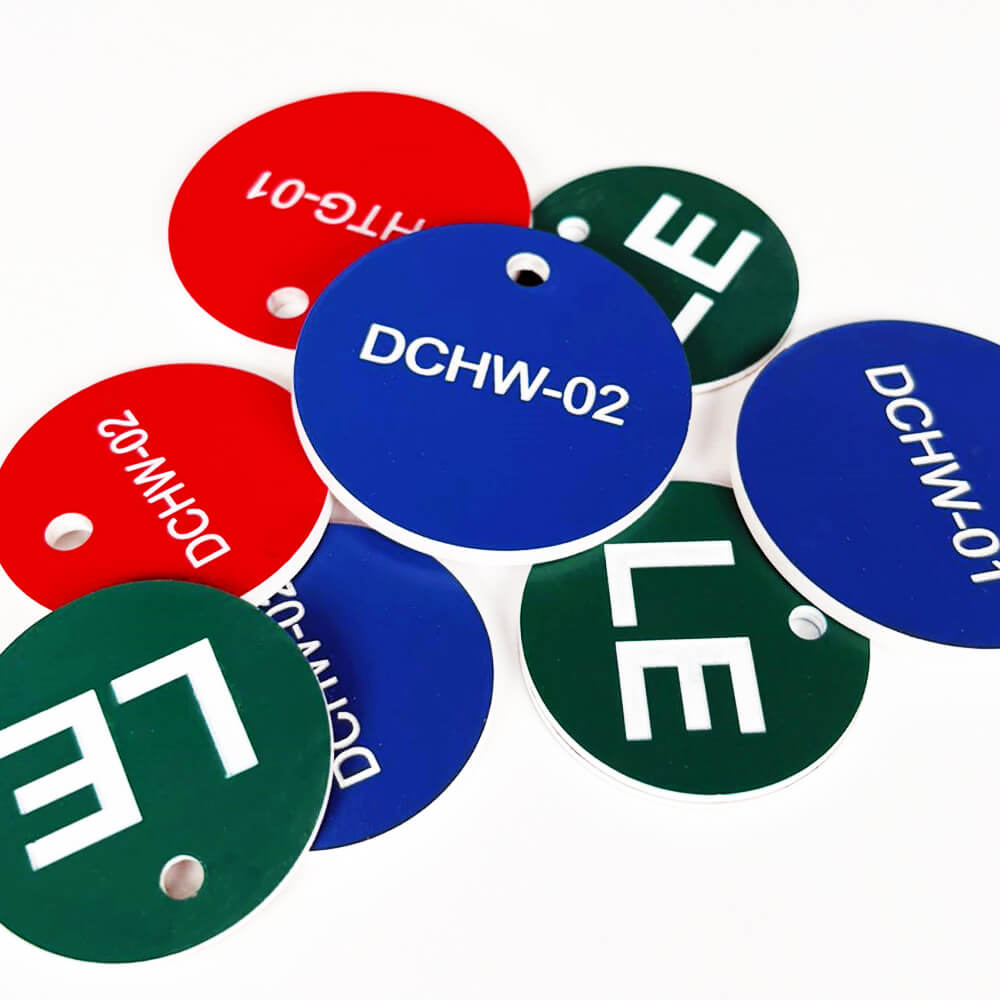
Traffolyte and impact acrylic are the two engraving laminates most commonly quoted for labels and signage in the UK, and in a product photo they can be hard to tell apart. Both are layered materials. Both reveal a contrasting core when engraved. Both produce permanent lettering that will not rub off or fade. The differences only show up in service, which is exactly where a wrong specification becomes expensive to correct.
This article sets out what actually separates the two materials, and how to decide between them for a given application. For a full grounding in traffolyte itself, our complete guide to traffolyte labels covers the material in depth.
What Is Impact Acrylic?
Impact acrylic is a modified acrylic engraving laminate. Like traffolyte, it is built from a coloured surface layer over a contrasting core, and engraving removes the surface to expose the colour beneath. The critical difference sits in the chemistry. Acrylic is a thermoplastic, which means it softens when reheated. Traffolyte is a phenolic thermoset, cured permanently into a hard state during manufacture.
That one distinction drives most of the practical differences between the two materials. It affects how they respond to heat, how rigid they are, how they cut, and where each one belongs.
Heat and Environment
Traffolyte is dimensionally stable under the temperature conditions found inside enclosed electrical panels, plant rooms and process environments. It does not soften or distort under normal industrial operating heat, and it carries a Class 2 flame spread classification under BS 476 Part 7.
Impact acrylic tolerates everyday indoor conditions comfortably but has a lower working temperature ceiling. Sustained heat can cause distortion, and its performance in demanding plant environments does not match phenolic laminate. Chemical resistance follows the same pattern. Traffolyte shrugs off water, most cleaning agents and light industrial solvents, while acrylic is more vulnerable to solvent attack and stress cracking around fixing holes.
Rigidity and Impact
The names are slightly misleading here. Impact acrylic earns its name from being tougher than standard cast acrylic, and it resists knocks and flexing well for signage duty. Traffolyte is the harder and more rigid of the two, which matters for larger labels, mechanically fixed plates and anything mounted where tools, trolleys and maintenance work make contact a certainty.
Appearance and Colour Range
This is where impact acrylic genuinely wins. It is available in a far wider range of colours and finishes than traffolyte, including brushed metallic effects, gloss surfaces and contemporary colour combinations that phenolic laminate has never offered. Acrylic also laser cuts cleanly with a polished edge, which suits shaped signs, badges and anything where the appearance of the edge matters.
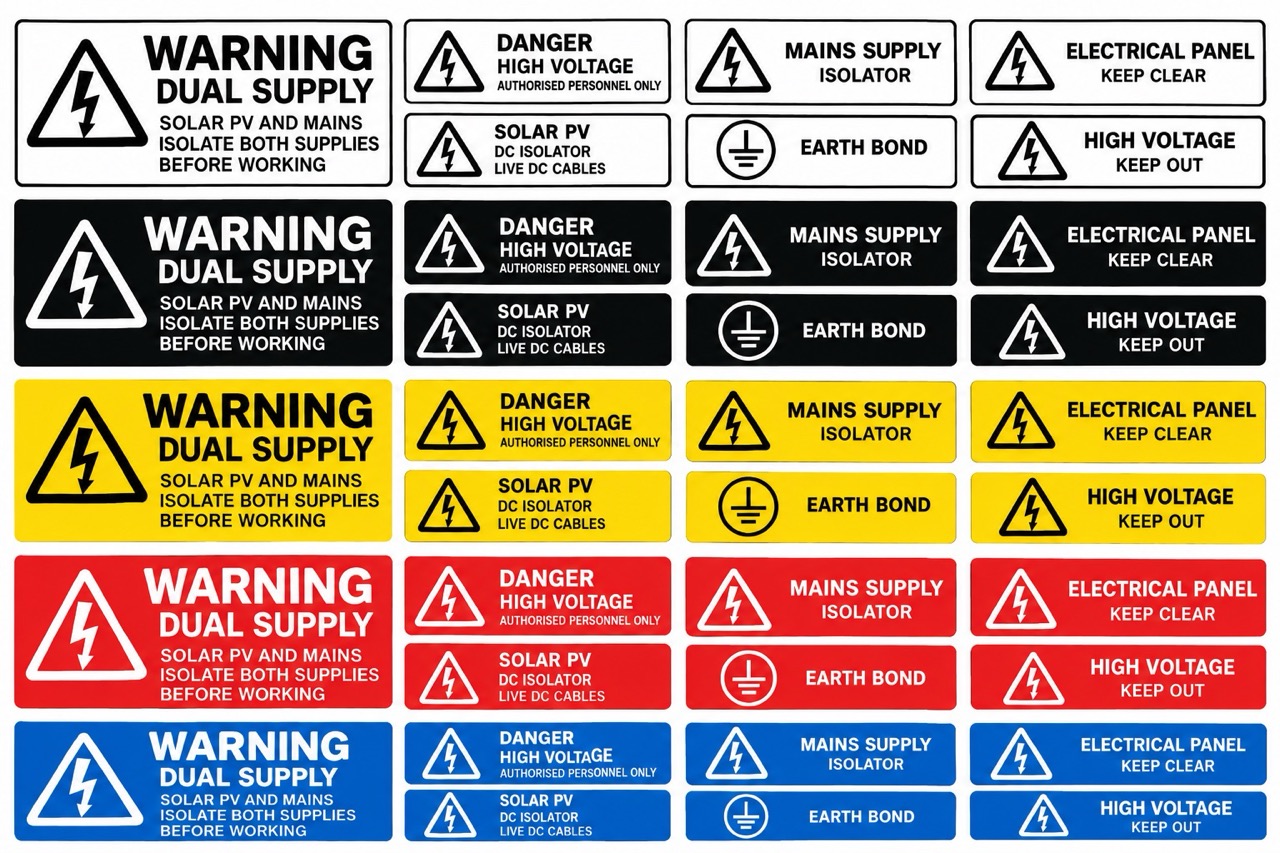
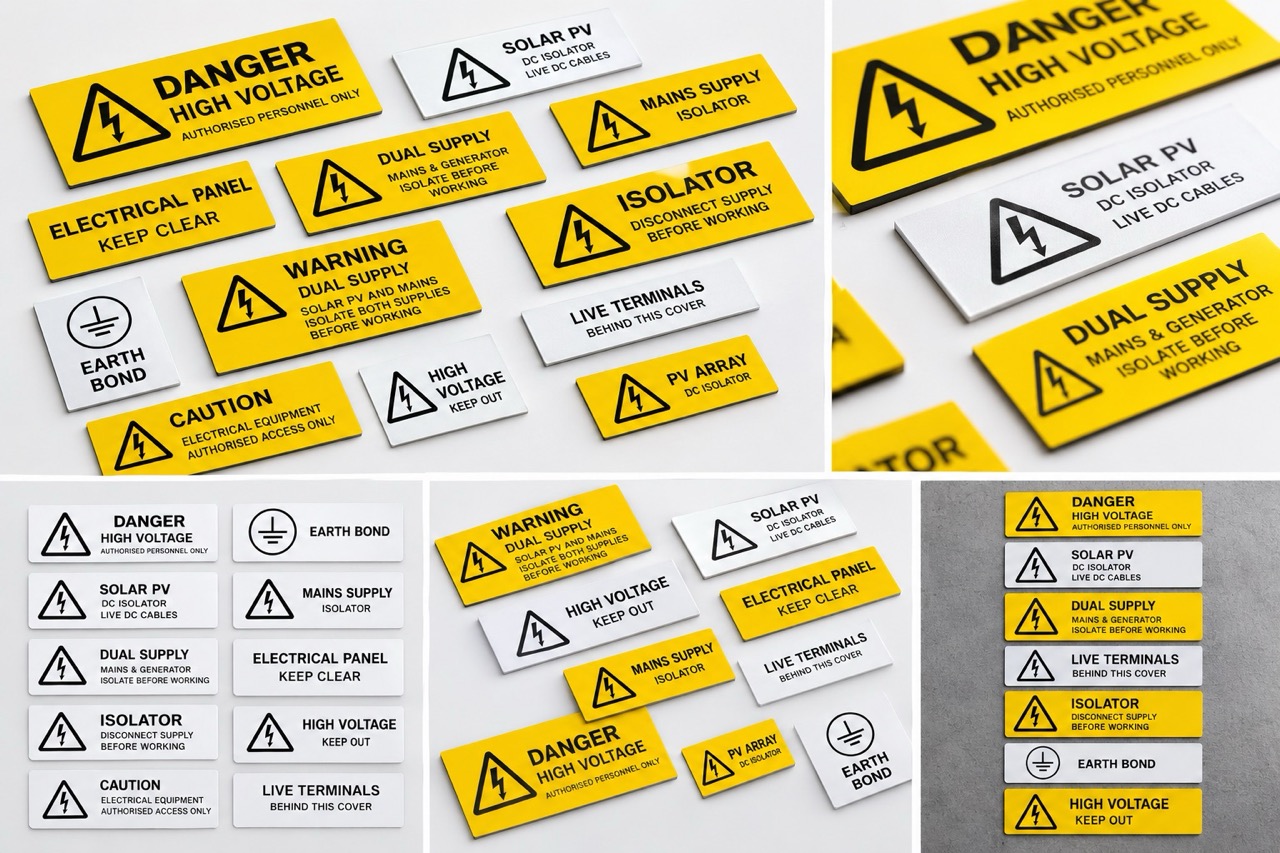
Traffolyte offers a functional palette built around legibility and safety conventions rather than aesthetics. Black and white, yellow and black for hazards, red and white for danger, blue and white for mandatory instructions. The finish is matt, industrial and consistent. It is not trying to look decorative, and in its intended environments that is a feature rather than a limitation.
Cost
Prices vary with size, quantity and engraving detail, but as a general rule the two materials sit close enough together that cost should rarely decide the specification on its own. The real cost difference emerges over the service life of the label. A material that distorts, cracks or has to be replaced early costs far more than the original saving, particularly on populated panels where access is restricted after commissioning.
Which Should You Specify?
Traffolyte remains the right specification for electrical control panels, switchgear, valve tags, plant infrastructure and any environment combining heat, chemicals, cleaning regimes and decades of expected service. Its track record across UK electrical installations spans close to a century, and specifications frequently call for it by name.
Impact acrylic is the better choice for signage where appearance leads the requirement. Office and door signs, badges, retail and hospitality signage, and lower exposure indoor applications all play to its wider colour range and cleaner cut edge.
The honest summary is that these are complementary materials rather than competitors. We engrave both, and the right conversation before ordering is about the environment the label will live in, not the material a project has always used. Our complete guide to traffolyte labels covers specification in more detail, and we are always happy to advise on a specific application.